
Kerrville, TX · Garage Door Service
Opener Repair for Ingram's 1976-Era Homes
Opener repair for Ingram, TX homes built mostly in 1976. We travel from Kerrville, 7 miles out, carrying parts for the chain-drive units common on this stock.
- Repairs & new doors
- Springs & openers
- Serving 4 nearby communities
The Cost of This Job
We can't give you a number over the phone that means anything, because opener repair cost depends on what's actually failed, and we don't quote blind. What we can tell you is how we think about it in Ingram specifically. Median household income here runs $49,295, well under the $68,427 figure across the rest of the territory we cover out of Kerrville. That gap matters to us - it's part of why we default to repairing a worn gear set or a dead circuit board before we talk about a full unit swap, when the opener's frame and motor housing are still sound. A new logic board costs less than a new opener. A stripped drive gear costs less than either. The only time we push hard for replacement is when the motor itself has burned out or the unit predates parts we can still source - and on a house built in 1976, that's a real possibility, not a scare tactic. We'll tell you straight which bucket your call falls into once we've had the cover off.
What the Fix Involves
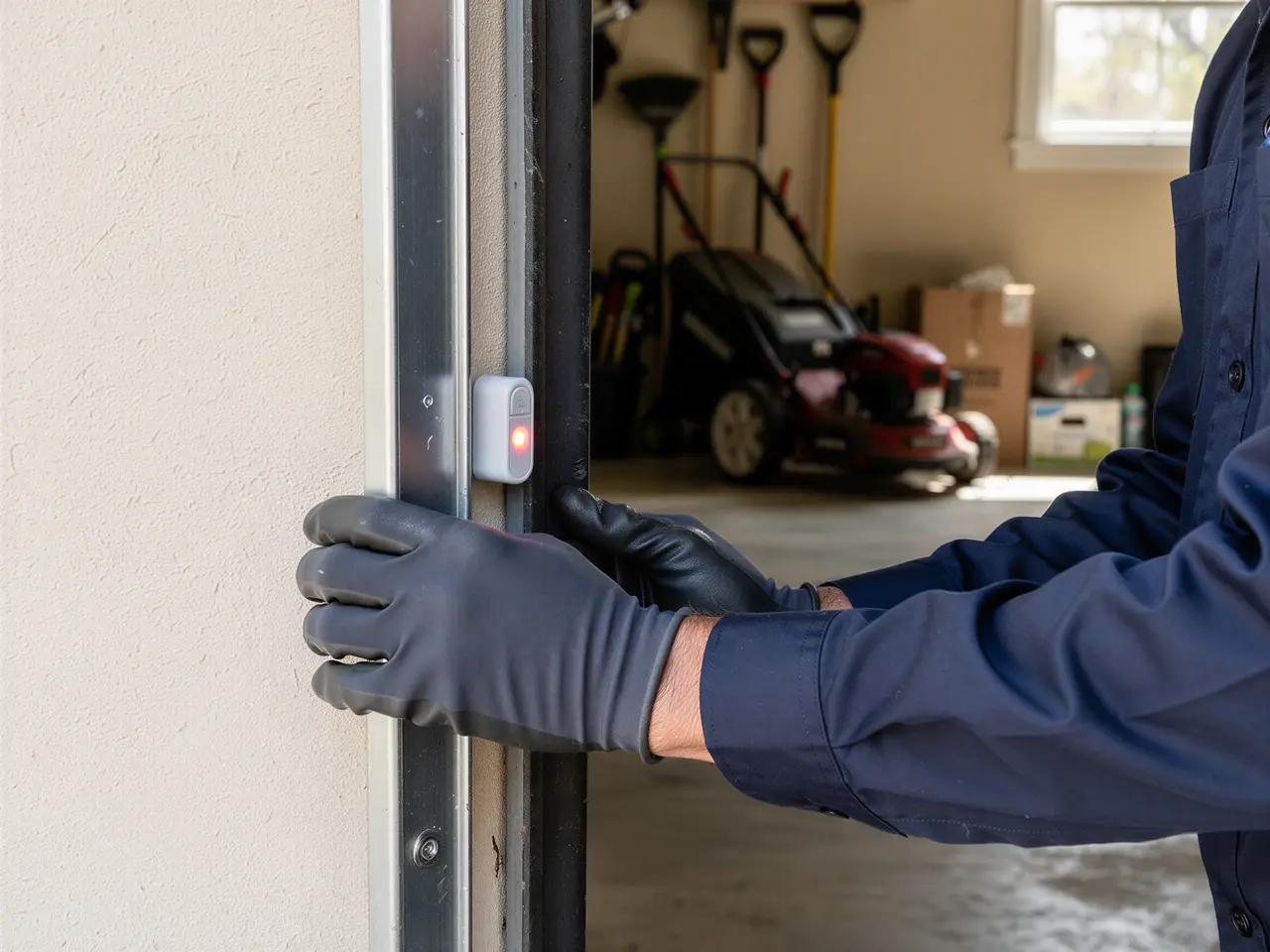
Most opener calls start the same way: we watch the door run once, listen to the motor, and check whether the problem is the opener itself or something downstream - a spring losing tension, a track binding, a roller dragging. If it's the opener, we're looking at the drive mechanism (chain, belt, or screw), the circuit board, the limit switches that tell the unit where open and closed actually are, and the safety sensors mounted low on the track. On older chain-drive units, which are common on houses from this era, worn sprockets and stretched chain links are the usual culprit - the motor itself often outlasts the drive train wrapped around it. We test the board separately from the motor, because a board can fail and mimic a dead motor, and swapping the wrong part doesn't fix anything. Once we've isolated the failure, we replace that part, run the door through a full open-close cycle, and recheck the auto-reverse function before we call the job done. We don't leave a unit running with a sensor out of alignment, even if the door closes fine that day.
Why It Happens Here
Ingram's housing stock centers on 1976, a good run of years before the broader service area's median build year of 1989. That fourteen-year gap isn't trivia - it's the difference between a door built with an opener added early versus one retrofitted later with second- or third-generation hardware. On a lot of these properties, what's hanging above the car today isn't the original unit; it's a replacement installed sometime in the '90s or 2000s, now itself twenty-plus years old and showing it. Chain drives from that stretch use steel gears inside a nylon housing, and that nylon is the first thing to give out - it strips teeth quietly, so the opener runs louder and louder for weeks before it quits outright. Add the climate here, which stays mild with occasional freeze mornings, and you get a second pattern: ice forming on the photo-eye sensors overnight, which reads to the opener as an obstruction and stops the door from closing until the sun's been up a while. Neither problem is dramatic. Both are predictable once you know the age of the hardware you're working on.
Parts We Carry
We keep drive gear kits, chain and belt sections, circuit boards, limit switch assemblies, and photo-eye sensor pairs on the truck, because those are the parts that fail most on the opener generations we see in this area. What we don't keep is a satellite stock sitting in Ingram - the truck comes from Kerrville, seven miles out, and what's loaded on it when it leaves is what we have to work with on that call. For common brands and common failure points, that's rarely a problem. Where it gets slower is a board for a discontinued model, or a part specific to an opener brand that stopped making replacements years ago - and on houses built in 1976, we do run into that. When a part isn't something we carry, we're honest about the lead time rather than promising a same-day fix we can't deliver. That's the one limitation worth saying plainly: we're good at diagnosing fast, less good at making an obsolete part appear overnight.
How Long It Takes
Because we're driving in from Kerrville rather than working out of a branch in Ingram, we build the trip into the job - there's no separate dispatch delay once we're on the road, but there's also no pretending we're already around the corner. Most opener repairs, once we're on site and have the right part in hand, wrap up in a single visit. The exceptions are the jobs where the failure points to a part we don't carry on the truck that day, which happens more often on older or discontinued opener models than on anything installed in the last ten years. With 722 households in Ingram and a housing stock mostly dating to the mid-1970s, that older-model scenario comes up here more than it does in newer parts of the territory, so we'd rather tell you upfront it might take a second trip than promise a finish time we can't back up.
Frequently asked questions
Is my opener too old to fix?
Not usually. If the motor housing and drive mechanism are intact, a worn gear kit or a replacement circuit board brings most units from the 1990s and 2000s back to normal operation. Age alone isn't a reason to replace - we only recommend a new unit when the motor itself has failed or we can't source parts for that specific model anymore.
Why does my door act up on cold mornings?
Ingram sits in a mild climate band with occasional freeze mornings, and that's usually enough for a thin layer of ice to form on the photo-eye sensors near the floor. The opener reads that as something blocking the door and refuses to close until it clears. It's rarely a wiring problem - clean the sensor lenses first before calling.
Do you carry parts for older opener brands?
We carry drive gears, chains, belts, boards, and sensors for the opener generations most common on homes built through the 1970s and 1980s. For a brand that stopped manufacturing parts years back, sourcing can take longer, and we'll tell you that upfront rather than guess at a timeline.
How far out is Kerrville from Ingram?
About seven miles. We travel out for opener calls rather than running a separate branch here, so the truck is loaded with the parts most likely needed for this area's housing stock before it ever leaves Kerrville.
Book garage door service in Kerrville
Call now or request a quote - tell us what the door is doing and where you are.